

Infrastructure decisions outlive the people who make them. A transmission network, a port, a water treatment works or a rail corridor will still be operating long after the approving committee has dispersed, under conditions nobody in the room experienced. That is what makes climate change infrastructure planning genuinely difficult: the choices are made now, the consequences land decades later, and the evidence base is improving faster than most approval processes can absorb.
The Inherited Baseline Is Wrong
Most infrastructure standards encode historical statistics design rainfall, temperature ranges, water levels drawn from twentieth-century records. Those records no longer describe the present, let alone the future. An asset built precisely to code may therefore be under-specified from commissioning, not because the engineering was poor but because the input data was outdated. The first thing decision makers should ask about any major project is whether its design conditions were derived from historical observation or from forward-looking projection.
Failures Propagate Through Systems
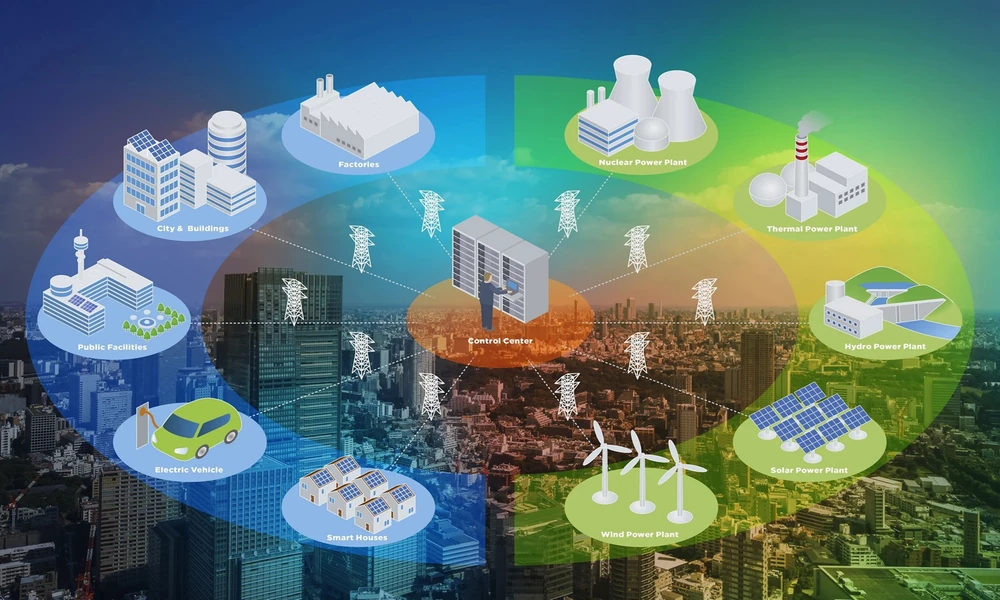
Infrastructure rarely fails in isolation. A flooded substation removes power from the water pumps, which removes supply from the hospital. A buckled rail line strands the workforce that operates the port. Assessing assets individually misses these chains entirely, which is why network-level analysis matters more than an inventory of separate risk scores. The practical consequence for a decision maker is that the most valuable resilience investment is often not in the largest asset but in the small dependency whose failure takes everything else with it.
Downtime Costs More Than Damage
Business cases tend to focus on physical repair because it is easy to estimate. The larger number is usually service interruption lost revenue, contractual penalties, economic damage to everything downstream, and the political cost of an outage. Those figures accumulate quickly across a network, which is why appraisals limited to reconstruction cost consistently understate the case for prevention.
Adaptive Capacity Varies Enormously
Two projects with identical hazard exposure can face very different futures depending on the jurisdiction around them. Local fiscal strength determines whether protective works get maintained. Institutional competence determines how quickly permits and emergency responses move. Existing grid and drainage redundancy determines whether a single failure becomes a regional outage. These factors sit outside any individual project’s control but shape its performance directly, which is why they belong in the appraisal rather than in the risk register’s footnotes. Work examining operational downtime from climate events shows how sharply recovery times diverge between jurisdictions facing otherwise comparable hazards.
Designing for a Range, Not a Forecast
Projections come with genuine uncertainty, and the temptation is to either ignore them or to over-build against the worst case. The better approach is adaptive design, specify for conditions that are robust across plausible scenarios, and build in the physical capacity to upgrade later without reconstruction. Foundations that can carry a future barrier, plant rooms with space for expanded cooling, drainage that can be augmented. This costs modestly more now and preserves options that a rigid design permanently forecloses.
The Value Engineering Trap
Resilience features are unusually vulnerable during cost-cutting exercises because their benefit is probabilistic while their cost is immediate and visible. Decision makers can counter this by requiring that any proposed removal be accompanied by a quantified estimate of the exposure it reintroduces and the cost of retrofitting it later. That single procedural requirement changes the conversation from “what can we cut” to “what does cutting this actually save”, which is usually less than it appears.
Financing Increasingly Depends on It
Lenders, insurers and public funders now ask location-specific questions about physical risk during due diligence, and terms reflect the answers. Projects arriving with parcel-level analysis and documented adaptation measures secure better pricing than those offering general assurances. For public infrastructure, the same evidence increasingly determines eligibility for climate-linked funding streams. The analysis therefore serves the financing case as directly as it serves the engineering one.
Questions Worth Asking at Approval
Decision makers do not need to become modellers. A short set of questions exposes most weaknesses, what design conditions were assumed and where did they come from; what happens to this asset under a higher-emissions scenario at mid-century; which dependencies would take it out of service; what would a week of downtime cost; what would it cost to add protection later versus now; and who owns the reassessment. Checking the answers against current climate resilience analysis is a straightforward way to test whether the project team’s assumptions are current.
The Longer View
Infrastructure built in the next decade will define how well cities and economies cope with conditions in the second half of the century. That is an uncomfortable amount of responsibility to carry through a procurement process designed around cost and schedule. It does not require perfect foresight it requires using the best available projections rather than obsolete records, and preserving the flexibility to respond as understanding improves.
None of this makes approval decisions easier, and it will occasionally make a project more expensive at the point where cost is most visible. What it does is move the difficult conversation to the stage where it can still be resolved cheaply. An asset that turns out to be under-specified reveals that fact through service failures, emergency expenditure and political exposure, usually at the least convenient moment and always at a higher price than the design uplift would have cost.
