
Wind is invisible, but its impact is powerful. From shaping weather systems to driving renewable energy, understanding wind behavior is essential in today’s technology-driven world. This is where a wind speed instrument plays a crucial role. With the help of modern anemometer sensors, industries can measure, analyze, and respond to wind conditions with precision like never before.
As environmental monitoring becomes smarter and more connected, wind measurement tools are evolving rapidly. In this article, we’ll explore the importance of wind speed instruments, how anemometer sensors work, their types, real-world applications, and why they are vital for modern infrastructure and sustainability.
What Is a Wind Speed Instrument and Why It Matters
A wind speed instrument is a device used to measure the velocity of air movement. While it may sound simple, the data it provides is incredibly valuable across multiple industries.
Wind speed data helps in:
- Predicting weather changes
- Enhancing safety in construction and aviation
- Improving renewable energy efficiency
- Monitoring environmental conditions
Without accurate wind measurement, many systems from weather forecasting to wind farms would operate blindly.
At the center of this technology is the anemometer sensor, a device specifically designed to capture wind speed and often direction.
The Role of Anemometer Sensors in Modern Technology
An anemometer sensor is the backbone of any wind speed instrument. It converts wind movement into measurable signals, allowing systems to interpret and analyze airflow data.
Modern anemometer sensors are not just standalone tools they are part of intelligent systems. They can connect with:
- IoT platforms
- Weather monitoring networks
- Industrial automation systems
This connectivity allows real-time data sharing, which is critical for decision-making in fast-changing environments.
How Wind Speed Instruments Actually Work
The basic idea behind a wind speed instrument is simple capture wind movement and translate it into data. However, the technology behind it can vary significantly depending on the sensor type.
Here’s a simplified breakdown:
- Wind interacts with the sensor
- The sensor detects movement, pressure, or temperature change
- The data is converted into electrical signals
- The system processes the signal into readable wind speed values
Different technologies use different methods, which leads to various types of anemometer sensors.
Key Types of Anemometer Sensors
Not all wind speed instruments are the same. Each type of anemometer sensor is designed for specific environments and applications.
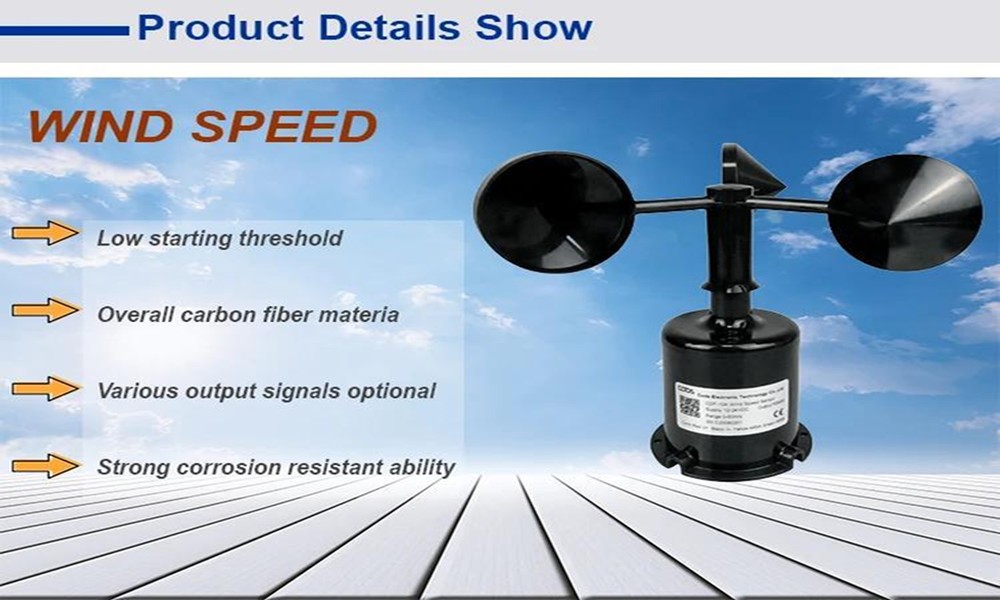
Cup Anemometer
This is the most recognizable wind speed instrument.
- Features rotating cups mounted on arms
- Wind causes the cups to spin
- Rotation speed determines wind velocity
It’s widely used in weather stations because of its simplicity and reliability.
Propeller Anemometer
Also known as vane anemometers, these are designed for directional accuracy.
- Uses a propeller that spins with the wind
- Measures both speed and direction
- Ideal for airflow studies and HVAC systems
Hot Wire Anemometer
This type focuses on precision, especially for low-speed airflow.
- Contains a heated wire
- Wind cools the wire
- Cooling rate is used to calculate speed
These sensors are often used in laboratories and research environments.
Ultrasonic Anemometer
A high-tech wind speed instrument with no moving parts.
- Uses ultrasonic sound waves
- Measures time differences in wave travel
- Calculates wind speed and direction with high accuracy
Because of their durability and precision, ultrasonic anemometer sensors are widely used in advanced monitoring systems.
Pressure-Based and Laser Sensors
These are specialized tools used in niche applications.
- Pressure sensors measure airflow through pressure differences
- Laser-based sensors detect particle movement in the air
They are commonly found in aerospace and scientific research.
Real-World Applications of Wind Speed Instruments
Wind speed instruments are used in more places than most people realize. Their impact stretches across industries and daily life.
Weather Forecasting
Meteorological departments rely heavily on anemometer sensors to:
- Track wind patterns
- Predict storms and cyclones
- Improve forecasting accuracy
Renewable Energy
Wind energy depends entirely on accurate wind data.
- Helps select ideal turbine locations
- Maximizes power generation
- Reduces operational risks
Without reliable wind speed instruments, energy efficiency would suffer.
Agriculture and Farming
Farmers use wind speed instruments to make smarter decisions.
- Plan pesticide spraying
- Monitor environmental conditions
- Protect crops from harsh weather
Construction and Infrastructure
Wind plays a major role in structural safety.
- Determines load on buildings
- Ensures crane and worker safety
- Helps design wind-resistant structures
Aviation and Marine Operations
Wind conditions directly affect safety in these sectors.
- Pilots rely on wind data for takeoff and landing
- Ships use it for navigation and route planning
- Helps avoid dangerous weather conditions
Environmental Monitoring
Wind speed instruments help track environmental changes.
- Monitor pollution dispersion
- Study climate patterns
- Analyze air quality
Benefits of Using Modern Wind Speed Instruments
With advancements in technology, today’s wind speed instruments offer far more than basic measurement.
High Precision
Modern anemometer sensors deliver accurate data even in rapidly changing conditions.
Real-Time Insights
Instant data allows quick decision-making in critical situations.
Smart Connectivity
IoT-enabled sensors can send data to cloud platforms for remote monitoring.
Low Maintenance
Advanced designs, especially ultrasonic sensors, require minimal upkeep.
Long-Term Reliability
These instruments are built to withstand extreme environmental conditions.
How to Choose the Right Anemometer Sensor
Selecting the right wind speed instrument depends on your specific application.
Here are key factors to consider:
Accuracy Level
High-precision environments like aviation require advanced sensors.
Environmental Conditions
Outdoor applications need weather-resistant designs.
Data Integration
Choose sensors that can integrate with your existing systems.
Maintenance Requirements
Low-maintenance options are ideal for remote installations.
Budget and Scalability
Consider both current needs and future expansion.
The Future of Wind Speed Instruments
The future of wind measurement is smart, connected, and data-driven.
Emerging innovations include:
As industries move toward automation and sustainability, the demand for advanced anemometer sensors will continue to grow.
Conclusion
A wind speed instrument is no longer just a measurement tool-it’s a critical component of modern technology and environmental intelligence. With the help of advanced anemometer sensors, industries can make smarter, faster, and more informed decisions.
From weather forecasting to renewable energy, these instruments are shaping a more efficient and sustainable future. As technology continues to evolve, wind speed measurement will become even more accurate, connected, and essential to our everyday lives.