
Key Takeaways
- Biometrics turn a person’s unique features into their access key, so there is nothing to lose or forget.
- Contactless options like facial recognition provide a fast and clean way for staff to enter the office.
- You can instantly grant or remove access for employees, which is much safer than relying on physical keys.
Introduction
As businesses settle into permanent hybrid work arrangements, the way employees move through the office has changed. The predictable nine-to-five routine no longer exists, replaced by a fluid stream of staff, freelancers, and delivery personnel entering at various hours, straining on older security setups that were never designed for such high-frequency, irregular use. Many business owners now realise that a basic lock and key or a legacy card access system in Singapore provides insufficient oversight for a modern workspace. There is a growing need for a biometric system that can verify identities accurately while maintaining the speed required for a busy Central Business District (CBD) lobby. Transitioning to a smarter entry method allows managers to focus on operations rather than constantly worrying about lost keys or unauthorised tailgating.
1. Moving Beyond Physical Credentials
The traditional reliance on plastic tags and physical keys often leads to administrative headaches when staff members inevitably lose their credentials. While a card access system in Singapore remains a reliable staple for many buildings, the cost of replacing lost cards adds up over a financial year. Upgrading to a modern biometric system removes this friction by turning the user’s own features into the primary key. This change ensures that security remains tied to the individual rather than a piece of plastic that someone could easily borrow or steal. Employees appreciate the convenience of not having to dig through bags for a pass while balancing a laptop and a morning coffee. Modern readers also process these inputs in milliseconds, preventing the morning bottleneck at the main glass doors.
2. Balancing Security With Contactless Preferences
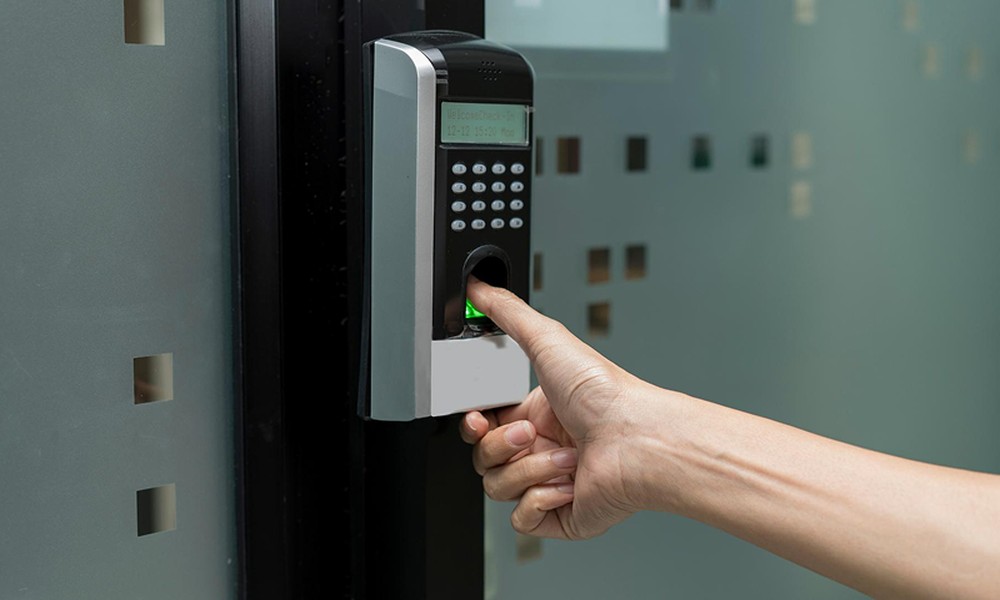
The legacy fingerprint scanner door access system faced significant scrutiny during the height of the pandemic due to concerns over shared touchpoints. While touch-based sensors have returned to common use, many offices now prefer a biometric system that offers a contactless experience, such as facial recognition or iris scanning. These advanced sensors allow employees to gain entry simply by glancing at a screen, maintaining a high level of hygiene in common areas. If a business still prefers a fingerprint scanner door access system, modern versions now feature antimicrobial coatings and high-sensitivity sensors that work with a light tap. Integrating these options into your entrance ensures that security does not come at the expense of staff comfort or health safety.
3. Integrating Attendance Tracking and Payroll
In a hybrid work setup, knowing exactly who is in the office at any given time is vital for both fire safety and payroll accuracy. A sophisticated biometric system records precise timestamps that sync directly with HR software. This automation replaces manual sign-in sheets and reduces the errors associated with human data entry. Unlike a standard card access system in Singapore, which can be susceptible to buddy punching, where one colleague taps in for another, a biometric system ensures the person recorded is actually the person present. This level of transparency helps managers understand office occupancy rates, allowing them to optimise utility usage and space planning. Real-time data access gives leadership the clarity they need to manage a distributed team effectively.
4. Scaling Security for Multiple Access Zones
Not every room in an office requires the same level of protection, making a layered approach to security essential. A company might use a general card access system in Singapore for the main pantry and meeting rooms, while installing a fingerprint scanner door access system for the server room or HR department, which allows for a granular level of control where sensitive data stays behind a biometric system that requires a unique physical identifier. Centralised management software allows administrators to grant or revoke access rights instantly from a remote dashboard. If an employee leaves the company, their access to all zones disappears with a single click, removing the need to recover physical keys.
5. Enhancing the Visitor Management Experience
The way a visitor enters your office sets the tone for your brand’s professional image. Moving away from a messy paper logbook to a digital biometric system for visitor registration impresses clients and enhances data privacy. Temporary visitors can receive a time-limited QR code or a guest pass from the card access system in Singapore that only allows them to enter specific floors. For high-security facilities, a one-time registration on a fingerprint scanner door access system ensures that guests remain accounted for throughout their stay. This professional oversight demonstrates that the company takes its security and its visitors’ safety seriously. Streamlining the reception process allows front-desk staff to focus on hospitality rather than acting as gatekeepers.
Conclusion
The most successful security setups are those that protect the workplace without disrupting the natural flow of a productive day. When you transition from a basic card access system in Singapore to a comprehensive biometric system, you solve multiple logistical problems simultaneously. The precision of a fingerprint scanner door access system provides peace of mind for sensitive areas, while contactless options maintain the smooth flow of traffic. Modern security is about making it effortless for the right people to get in. By investing in hardware that supports the way we work today, you protect both your physical assets and your team’s well-being.
Contact iDLink Systems to find out how a modern biometric system can secure your workspace and streamline your operations.