

Key Takeaways
- A solo app designer suits early-stage validation where no live system exists.
- A full mobile application development team becomes necessary once users interact with real data.
- Design documentation bridges the gap between concept approval and production build.
Introduction
Most app projects in Singapore do not fail because of weak ideas. They stall because founders hire the wrong type of help at the wrong stage. A first-time founder often searches for an app designer in Singapore, assuming design work equals app creation. Design produces screens and user flows, but it does not produce software that runs on a phone, processes data, or stays secure under real usage. Confusion between these roles creates cost overruns and stalled builds. Clear separation between design work and mobile application development in Singapore prevents these problems and keeps the project aligned with its actual stage.
When an App Designer Fits the Job
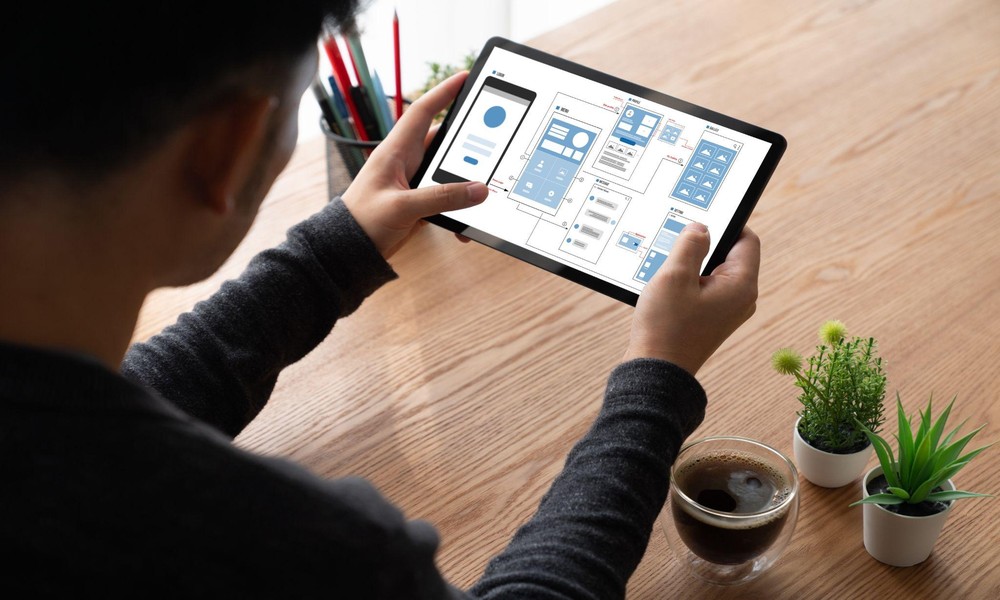
Early-stage ideas carry uncertainty. At this point, spending heavily on engineering locks money into assumptions that may change. An app designer in Singapore works best when the goal involves validation rather than launch. Designers translate rough ideas into realistic screens that resemble a finished product. These screens allow founders to test navigation, onboarding flow, and feature order before writing a single line of code.
Founders often use these prototypes during investor meetings. A clickable demo communicates intent faster than written descriptions. Stakeholders see how users move through the app and where value appears. Designers also support user interviews by observing where testers hesitate, abandon tasks, or misunderstand actions. These insights prevent expensive rework later. At this stage, no servers run, no user data stores, and no security risks exist. Design work remains sufficient because nothing needs to operate beyond demonstration.
Where Design Work Reaches Its Limit
Problems begin when founders mistake approval for readiness. A prototype convinces investors, but it does not support users. Once real people create accounts, submit information, or make payments, the system requires structure beneath the interface. Screens alone cannot save preferences, recover passwords, or sync data across devices.
At this point, continuing with only an app designer in Singapore creates false progress. The app appears finished, but it cannot function independently. Any attempt to bolt features onto static designs introduces instability. Delays occur because design tools cannot replace backend systems. Recognising this boundary avoids stalled timelines.
When a Full Development Team Becomes Necessary
Public launch demands a different skill set. Mobile application development in Singapore involves engineering teams who build logic, infrastructure, and safeguards. Frontend developers convert designs into responsive interfaces that behave consistently across devices. Backend developers create databases, user authentication, and payment workflows. These components store and retrieve information securely under real usage conditions.
Quality assurance testers add another layer. They simulate usage across operating systems, screen sizes, and network conditions. Bugs surface here, not during design. Without this testing, apps crash under normal behaviour. App stores reject unstable submissions, creating further delays. At the launch stage, engineering becomes mandatory because user trust depends on reliability.
Understanding the Hand-Off Between Design and Development
Design output does not disappear once development begins. Designers produce specifications that describe how screens behave under different conditions. These documents define spacing, transitions, error states, and user feedback. Developers rely on this information to build accurate interfaces without guessing intent.
When teams skip this hand-off, engineers interpret designs differently. Features behave inconsistently, and revisions multiply. Clear documentation keeps responsibilities aligned. Designers describe experience. Developers implement behaviour. Each role stays focused, reducing friction and wasted effort.
Cost Decisions Tied to Project Stage
Hiring decisions shape budgets more than hourly rates. A designer costs less than a full engineering team because the scope stays limited. Design projects end once validation is complete. Engineering projects continue through launch, maintenance, and iteration.
Founders who hire development teams too early pay for infrastructure they may discard later. Those who delay engineering too long lose momentum after validation. Matching talent to project phase controls cost and risk simultaneously.
Making the Choice Without Guesswork
The deciding factor is not ambition. It is an interaction with live systems. If users will only view screens and simulate actions, design work suffices. If users will submit data, receive notifications, or complete transactions, development becomes unavoidable.
Clear answers emerge when founders ask practical questions. Will the app store user information? Will payments occur? Will accounts persist across sessions? Each yes moves the project closer to full mobile application development in Singapore. Each one keeps it safely within design scope.
Conclusion
App projects progress smoothly when founders separate appearance from function. An app designer in Singapore helps shape ideas into testable experiences. A mobile application development team builds systems that survive real usage. Treating these roles as sequential rather than interchangeable prevents wasted effort. Projects advance faster when each stage receives the right expertise at the right time.
Contact Activate Interactive to plan your app build clearly, starting with design validation and scaling confidently into full mobile application development when your product is ready.
