

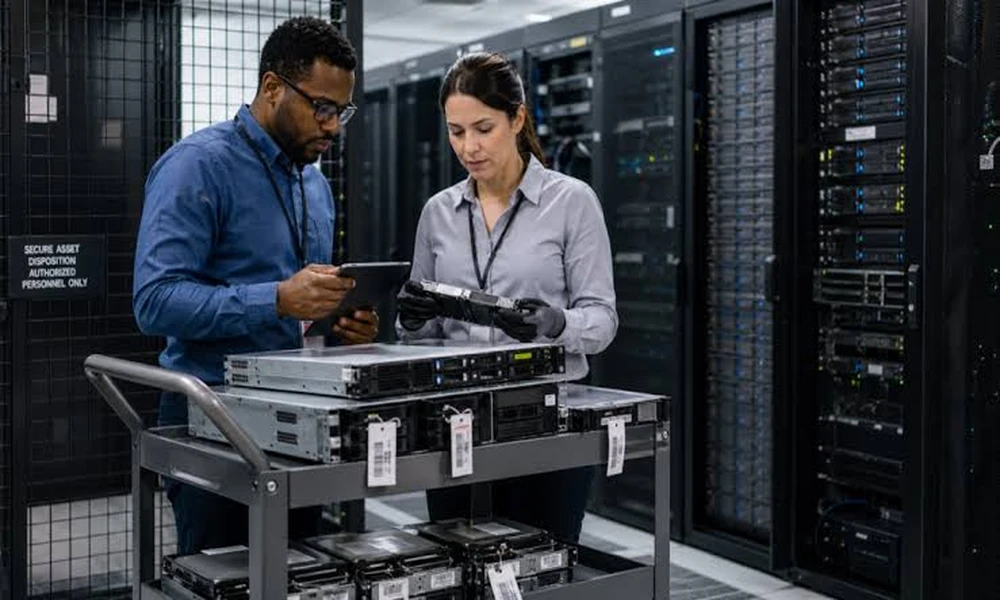
A technology refresh is usually budgeted as pure cost: new laptops, new servers, new licences. The equipment being replaced sits on the other side of the ledger with no figure attached, even though much of it can still be sold. An it asset buyback programme changes that by turning retired hardware into a recoverable sum that offsets part of the upgrade. For organisations that refresh on a regular cycle, the savings compound, because the programme also removes disposal fees, storage costs and some of the administrative effort that comes with every rollout.
The Hidden Cost of Keeping Old Equipment
Retired devices rarely go straight out of the door. They wait in storerooms, under desks and in branch offices, sometimes for years. During that time they lose resale value, take up space and remain a data security risk because their drives have not been wiped. Each quarter of delay costs money even though no invoice arrives. A buyback programme sets a defined exit route, so equipment leaves while it is still worth something and before anyone forgets what is stored on it.
How Buyback Offsets Upgrade Spend
The mechanism is simple. A provider assesses your retiring equipment, offers a price or revenue share, collects it, wipes it and resells what it can. The proceeds can be paid out or credited against the cost of new hardware. The return will not fund an entire refresh, but on a fleet of recent business laptops it can make a visible difference to the per-seat cost. It also gives finance a predictable credit to plan around, rather than a vague hope that old equipment might be worth something. Typical sources of value include:
- Business laptops and desktops within three to four years of purchase
- Servers, storage arrays and networking switches still in vendor support
- Monitors, docking stations and peripherals sold in bulk
- Smartphones and tablets that can be reset and unlocked
Lower Disposal and Handling Fees
Without a buyback arrangement, businesses often pay to have old equipment collected and recycled. When the provider expects to resell part of the batch, those fees are usually reduced or absorbed into the overall settlement. Data wiping, transport and reporting are bundled rather than bought separately, and a single provider is accountable if anything goes wrong. That simplifies procurement, since one contract covers what might otherwise involve a courier, a shredding service and a recycler, each with its own paperwork.
Shorter Refresh Cycles Become Viable
Many organisations keep laptops for five years or more because replacing them earlier seems expensive. Once resale value is factored in, the calculation can shift. A three-year-old laptop returns far more than a six-year-old one, and staff on newer equipment generally spend less time on support tickets. A well-run it asset buyback arrangement lets finance teams model total cost of ownership rather than purchase price, which sometimes shows that a shorter cycle costs roughly the same overall while delivering better equipment.
Security Stays Part of the Deal
Recovering value must never come at the expense of data protection. Every device should be sanitised to a recognised standard, such as the methods described in NIST SP 800-88, and each serial number should appear on a certificate confirming the result. Drives that fail verification should be destroyed rather than resold. Insisting on this protects you under Singapore’s Personal Data Protection Act, and reputable buyers expect to provide it as standard.
Sustainability Benefits Count Too
Reusing equipment avoids the emissions and raw material extraction involved in making a replacement for someone else. Many organisations now report on electronic waste and circular economy targets, and buyback figures make that reporting concrete. Useful measures to track include:
- Number of devices resold versus recycled
- Total weight of equipment diverted from landfill
- Revenue recovered per refresh cycle
These numbers also help justify the programme internally when budgets are reviewed.
Planning a Buyback Into Your Next Refresh
The best results come from planning the buyback before new equipment arrives. Agree a collection date shortly after deployment, so old devices do not drift into storage. Ask your IT team to remove management locks and passwords during the swap, and keep chargers with their laptops. Share an asset list with the provider early so they can quote accurately and book enough capacity to collect everything in one visit. Agree in advance what happens to devices that arrive damaged or incomplete, so the final settlement holds no surprises.
Questions to Put to a Provider
Before signing, ask how the provider calculates value, whether the offer is fixed or based on actual resale, and what fees are deducted. Request a sample settlement report and a sample data destruction certificate. Check that they can handle every asset type in your fleet and that their recycling partners are licensed. A provider offering secure IT asset disposal with resale value recovery should be able to answer all of this without hesitation.
The Budget Line Worth Adding
Add a single expected recovery figure to your next refresh budget, even a conservative one. Once it is written down, someone becomes responsible for achieving it, and the old equipment stops being an afterthought.
