

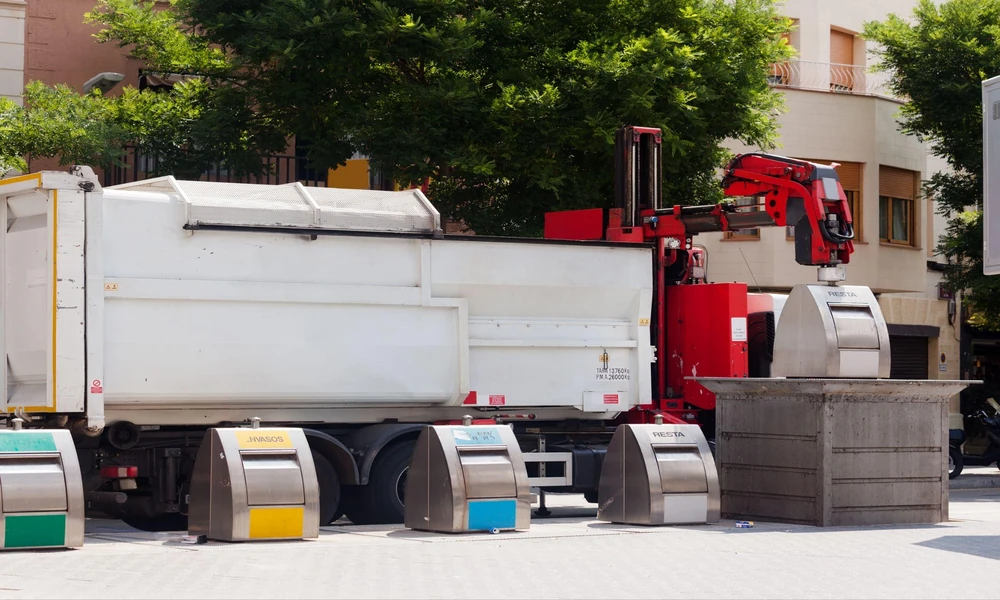
Image Recommendation: A waste collection truck at a bin enclosure with a visibly half-empty bin, daylight, industrial estate setting.
A truck pulls up to a bin at 7 am on Monday, exactly as scheduled. The bin is a third full. Fuel gets burned, labour gets spent, and the truck moves on to the next stop, also mostly empty, also right on schedule. Three days later, a bin across town overflows between scheduled visits, and nobody knew until someone complained. Same system, two opposite failures, both coming from the same root cause.
Neither failure looks dramatic on its own. Both are quietly built into a routing model that was never actually designed around what’s happening inside the bins themselves.
What Actually Decides When a Truck Shows Up
The difference between a calendar-driven route and a need-driven one comes down to a single variable:
| Fixed Schedule | Fill-Level Triggered | |
| What triggers a pickup | The calendar, regardless of fill level | Actual bin capacity reaching a threshold |
| Half-empty bin visits | Common, built into the fixed route | Rare, since a pickup only triggers when needed |
| Overflow risk | Possible between scheduled visits | Flagged before it becomes a problem |
Most waste operations still run on the left column, not because it’s efficient, but because it’s the default nobody’s had a practical reason to change.
That’s really the whole story here. It’s not that fixed scheduling was ever a bad idea, it’s that it was the only workable option for a long time, and habits built around that constraint tend to outlast the constraint itself.
Why Fixed Schedules Became the Industry Standard in the First Place
Calendar-based collection made sense before there was any other reliable way to know a bin’s actual fill status without a truck physically driving past it. A fixed schedule guaranteed coverage, which was the priority when the alternative was no visibility at all. That constraint no longer exists in the same way, but a lot of routing still runs as though it does.
What Sensor-Based Collection Actually Changes
Fill-level sensors give a fleet actual visibility into which bins genuinely need a visit and which don’t, turning route planning from a fixed guess into a responsive schedule. A properly deployed waste management IoT solution replaces the calendar with real bin data, cutting the empty-bin visits and catching the overflow risk before either becomes an actual problem.
The fuel and labour savings tend to be the headline number, but the reduced overflow risk is often just as significant operationally, particularly in high-traffic areas where a missed pickup is genuinely visible.
Dispatch teams also tend to notice a shift in how their day actually runs: less firefighting overflow complaints, more predictable route planning built around what the bins are actually reporting.
Why This Needs to Sit on One Platform, Not a Patchwork of Tools
Fill-level data is only useful if it actually reaches route planning in a form dispatch can act on quickly, rather than sitting in a separate dashboard nobody checks in real time. Unified IoT platform solutions tie sensor data directly into route and fleet management, so a fill-level alert actually changes a route that day, not in next week’s planning meeting.
The Cost That’s Easy to Miss on a Fixed Schedule
None of the waste from a half-empty bin visit shows up as a single dramatic expense. It’s a few extra litres of fuel here, a few minutes of labour there, spread across every truck, every route, every single day. Multiplied across a fleet over a year, that quiet inefficiency adds up to considerably more than it looks like on any individual stop.
It rarely shows up as a single line item on a budget either, which is exactly why it tends to go unquestioned even at operations that are otherwise run efficiently.
A truck visiting an empty bin and a bin overflowing between visits are really the same problem viewed from two different angles: a schedule that has no idea what’s actually happening inside the bin it’s driving toward. Fixing that gap isn’t about working the fleet harder. It’s about finally giving the route the information it was always missing.
Once that information exists, the routing decisions it feeds into stop being guesses and start being genuinely informed.
Curious how much fuel and labour a fixed schedule is quietly costing your fleet? Contact Overdrive IoT and see what the actual bin data would show.
