
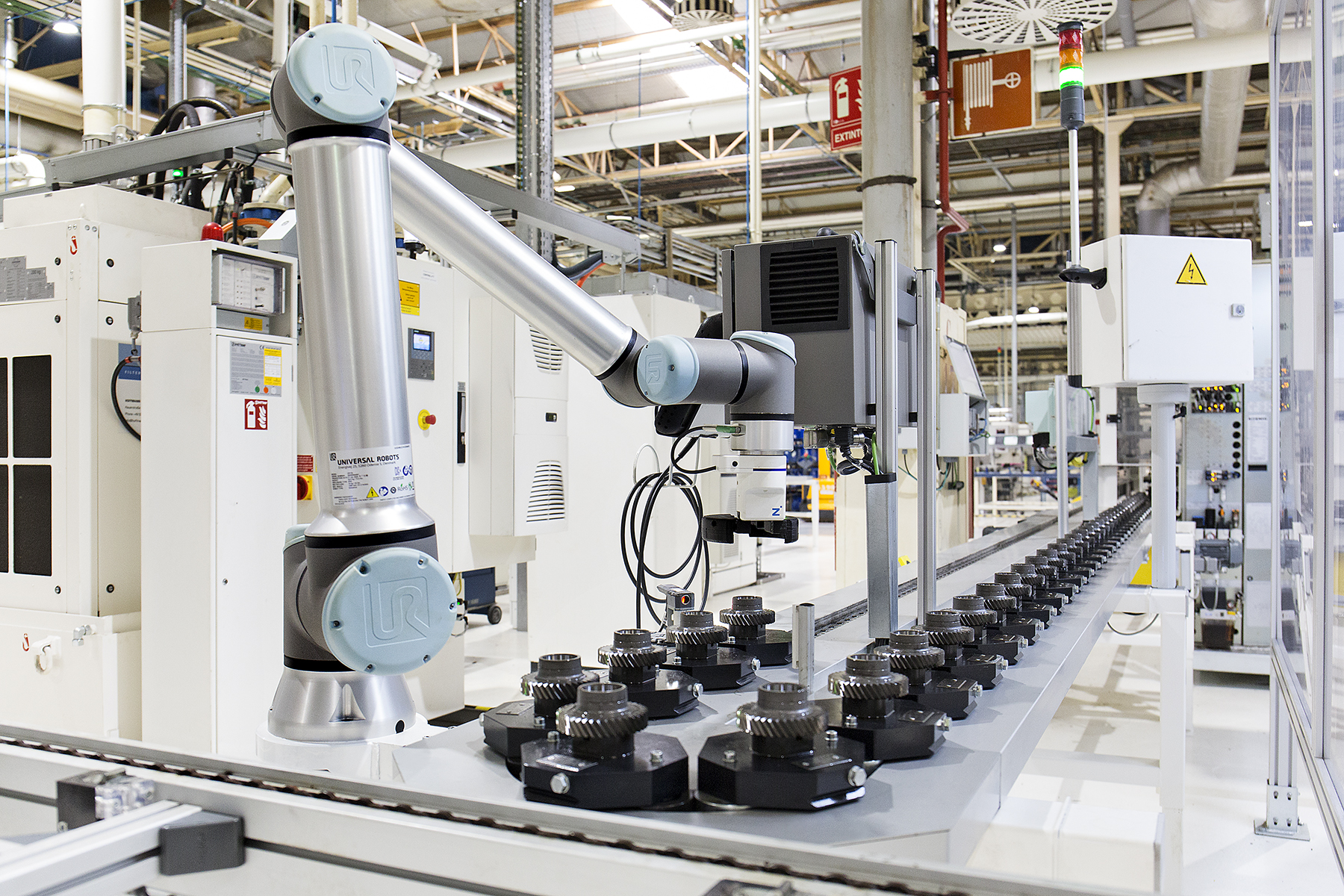
In the drive toward flexible automation, the spotlight often falls on the robotic arm itself—its payload, reach, and ease of programming. However, the true bridge between a digital command and a physical task lies at the end of that arm. End-of-arm tooling (EOAT) is the component that actually interacts with the product, yet it is frequently the most overlooked factor in project timelines.
Traditionally, EOAT was a domain of bespoke engineering. Each new task required a custom-designed bracket, unique wiring harnesses, and specific software drivers. While effective for high-volume, static production lines, this “one-off” approach creates significant bottlenecks in modern manufacturing. For production managers and engineers, moving away from fragmented, custom hardware toward a standardized EOAT ecosystem is no longer just a technical preference; it is a strategic necessity for scaling automation.
The Hidden Cost of Custom Integration
When a system is designed specifically for one station, the technical debt begins to accumulate the moment the project starts. Custom-built tools often lack documented interfaces, making them difficult to troubleshoot for anyone other than the original designer. If a specialized gripper fails, the production line may sit idle while a replacement part is machined or a proprietary sensor is sourced.
Beyond maintenance, the lack of standardization creates a “silo” effect. A tool designed for a specific CNC machine tending station cannot be easily moved to a packaging line, even if the payload requirements are similar. This rigidity forces companies to reinvest in engineering hours for every new deployment, significantly increasing the total cost of ownership. In contrast, standardized tools use universal mechanical interfaces and unified software environments, allowing for a “plug-and-produce” workflow that mirrors the simplicity of modern consumer electronics.
Unified Interfaces and Technical Risk Mitigation
Standardization in collaborative robotics focuses on three primary layers: mechanical, electrical, and communication. By adopting tools that adhere to ISO 9409-1 flange standards or utilize universal quick-changers, engineers eliminate the need for custom adapter plates. This mechanical uniformity ensures that the tool’s center of mass and weight are predictable, which simplifies the safety calculations required for collaborative operation.
On the electrical and data side, standardized tools often utilize a single cable or even wireless communication to interface with the robot’s controller. When the software is also standardized—offering URCaps or similar integrated plugins—the robot can recognize the tool instantly. This level of compatibility means that process engineers can spend their time optimizing the workflow rather than debugging handshaking protocols between disparate hardware components.
Scalability in High-Mix Environments
For small and medium-sized enterprises (SMEs), the ability to reconfigure a workspace is vital. High-mix, low-volume production requires equipment that can pivot between tasks in minutes. Standardized EOAT supports this through:
- Rapid Reconfiguration:A standardized tool changer allows an operator to swap a vacuum gripper for a mechanical one without rewiring the system.
- Reduced Spare Parts Inventory:Using the same family of tools across multiple robot cells reduces the number of unique components that maintenance teams must stock.
- Knowledge Transfer:When the interface is consistent, operators only need to be trained once. The logic used to control a gripper on one station will be identical to the logic used on the next.
This repeatability lowers the “technical barrier to entry” for staff. Instead of needing a specialized robotics engineer for every adjustment, on-site maintenance managers can handle tool swaps and basic reprogramming, keeping the system adaptable to daily production shifts.
Strategic Planning and Investment
Viewing EOAT as a modular asset rather than a fixed part of a machine changes the financial outlook of automation. Standardized tools are generally platform-agnostic, meaning they can be migrated to different robot brands if the facility’s hardware strategy evolves. This future-proofs the investment.
Furthermore, standardized tooling reduces the uncertainty in project lead times. Because the tools are off-the-shelf and pre-validated, the risk of “integration creep”—where unforeseen technical hurdles delay a launch—is drastically minimized. For decision-makers, this translates to more predictable ROI and a faster path to full production.
While there are niche applications where a custom-engineered tool is unavoidable due to extreme precision or unusual part geometries, these are becoming the exception. For the vast majority of assembly, machine tending, and material handling tasks, the efficiency gained through a unified tooling strategy far outweighs the perceived benefits of a bespoke solution.